You may have seen moringa in a health-food aisle, a smoothie recipe or an online ad. It goes by several names, including the "drumstick tree," after its long, thin seed pods. But what is it, really, and is the attention justified? Here is a plain-English guide.
What moringa is
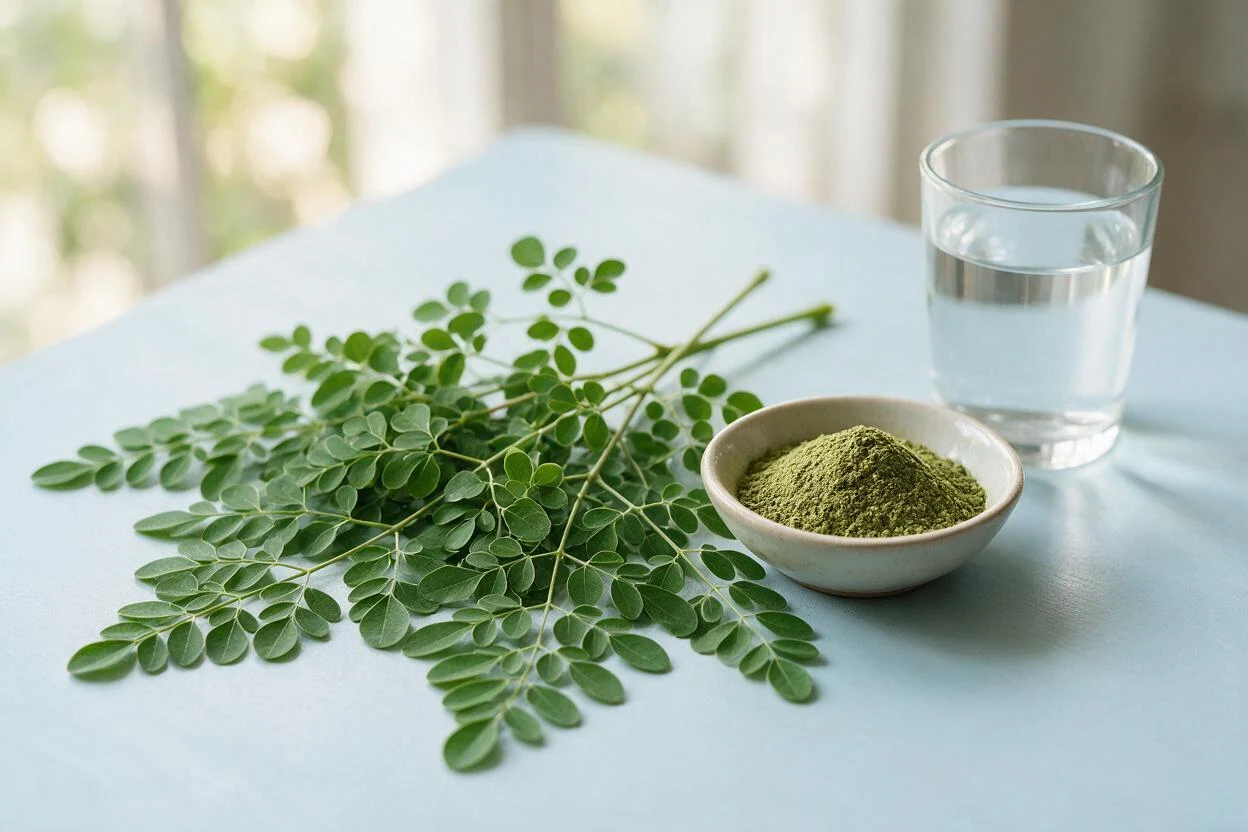
Moringa oleifera is a fast-growing tree native to South Asia and now cultivated across the tropics. Its leaves and young pods are cooked and eaten as vegetables in many countries, and the leaves are the part of the plant used most, according to a detailed scientific review.
Outside those regions, moringa leaves are usually sold dried: as a green powder to stir into food or drinks, or packed into capsules.
What's in the leaf
Moringa's reputation comes from its nutrient profile. When researchers analyzed dried leaf powder grown in Zambia, they reported large amounts of protein, minerals and vitamins, such as iron, calcium and carotenoids. The leaves also contain plant compounds that researchers are interested in, including polyphenols and flavonoids, according to a 2015 review of moringa's safety and research.
One caution: nutrient levels vary with where and how the plant is grown and processed. That same review noted that "standardization of products is an issue." In other words, two moringa products may not be identical.
What research can and can't tell you
Online marketing often goes further than the evidence supports. The research has several limits:
- Most research has been done in labs and animals. Many published studies look at moringa extracts in cells or animals, which doesn't tell us how a capsule works in a person.
- Human studies are still limited. The Leone review concluded there are still too few human studies to recommend moringa leaves for preventing or treating any condition.
- It appears to be well tolerated as a food. The 2015 review reported no adverse effects in the human studies available at the time.
So moringa is best understood as a nutrient-rich leaf that some people like to add to their daily routine, not a remedy. Be wary of any page that promises dramatic results.
How people use moringa
- Cooked leaves: in parts of South Asia and Africa, fresh leaves go into soups, stews and curries, much like spinach.
- Powder: stirred into smoothies, yogurt, soups or sauces. It has a strong, grassy taste that not everyone enjoys.
- Tea: dried leaves steeped in hot water.
- Capsules: a pre-measured amount of powder for people who want consistency without the taste.
How to read a moringa supplement label
- Plant part: look for "leaf." Seeds, roots and bark are different and are not the same as eating the leaf.
- Amount per serving: check how many milligrams of leaf you get, and how many capsules that takes.
- Whole leaf or extract: whole-leaf powder and concentrated extracts are not the same product.
- Other ingredients: shorter lists are easier to understand.
- Company details and guarantee: a real address, contact information and a clear refund policy.
One option that keeps it simple
Moringa by Fernwyn contains a single active ingredient, moringa leaf, in vegetable capsules. It is sold as a one-time purchase with no subscription and, according to the company, a 60-day money-back guarantee.
Moringa by Fernwyn: what's in it
| Moringa oleifera leaf: 800 mg per serving (2 vegetable capsules) |
|---|
| Other ingredients: cellulose (vegetable capsule) |
| Per bottle: 60 capsules, a 30-day supply |
| Suggested use (per the company): 2 capsules a day with water, 20 to 30 minutes before a meal |
| Made by: Ancient Energies LLC, 3422 Old Capitol Trl, PMB 1518, Wilmington, DE 19808. Source: product page, checked Nov 12, 2026 |
As with any supplement, results vary, and it works best alongside an otherwise balanced diet.
Common questions
Are the "drumsticks" sold in grocery stores the same plant?
Yes. The long green pods sold as "drumsticks" in many South Asian grocery stores come from the same tree. Supplements are usually made from the leaves, which are a different part of the plant.
Who should be careful?
Anyone who is pregnant, breastfeeding, taking medication or managing a health condition should ask a doctor before starting moringa or any other supplement.
Choosing a moringa supplement
Moringa is a real food plant with an interesting nutrient profile and a long history of use. The science on its effects in people is still developing, so think of it as a convenient leaf supplement rather than a remedy, and choose a product that tells you exactly what's inside.
These statements have not been evaluated by the Food and Drug Administration. This product is not intended to diagnose, treat, cure, or prevent any disease.
Talk to your doctor before starting any supplement, especially if you are pregnant, breastfeeding, or take prescription medication. This article is general information, not medical advice.
Sources & further reading
- Leone A et al. … Moringa oleifera Leaves: An Overview. Int J Mol Sci, 2015
- Nutritional characterisation of Zambian Moringa oleifera… Int J Food Sci Nutr, 2019
- Stohs SJ, Hartman MJ. Review of the Safety and Efficacy of Moringa oleifera. Phytother Res, 2015
- Product details: Moringa by Fernwyn "Daily Routine" page (company information)
Published by Simple Strong Living. Questions or a correction? Get in touch.