When egg prices jumped in 2025, rising 21.9% over the year according to the U.S. Department of Agriculture, a lot of families started pricing chicken coops. Now USDA expects retail egg prices to fall about 29% in 2026 (USDA ERS).
So if cheap eggs are your only goal, chickens may not pay for themselves. But many families keep a small flock for other reasons: eggs they know the source of, compost for the garden, a daily routine the kids can share, and one more way to rely a little less on the store. If that sounds like you, here's what to know before you buy a single chick.
Step one: check your local rules
Start with your city or county, not the feed store. Some places require a permit for backyard poultry, some limit how many birds you can keep, and some don't allow them at all (University of Minnesota Extension). Many towns ban roosters, and homeowners associations often have their own rules. Selling eggs usually brings additional regulations.
How many eggs to expect
A healthy hen in her prime lays up to about six eggs a week at her peak, according to Minnesota Extension. Hens usually start laying at around six months old and are most productive in their first two years.
Production isn't steady all year. Laying drops when days get shorter in the fall and during the yearly molt, when hens put their energy into growing new feathers. Oregon State University Extension adds that hens typically lay well until about two or three years of age, after which production declines, and that all hens eventually stop (OSU Extension).
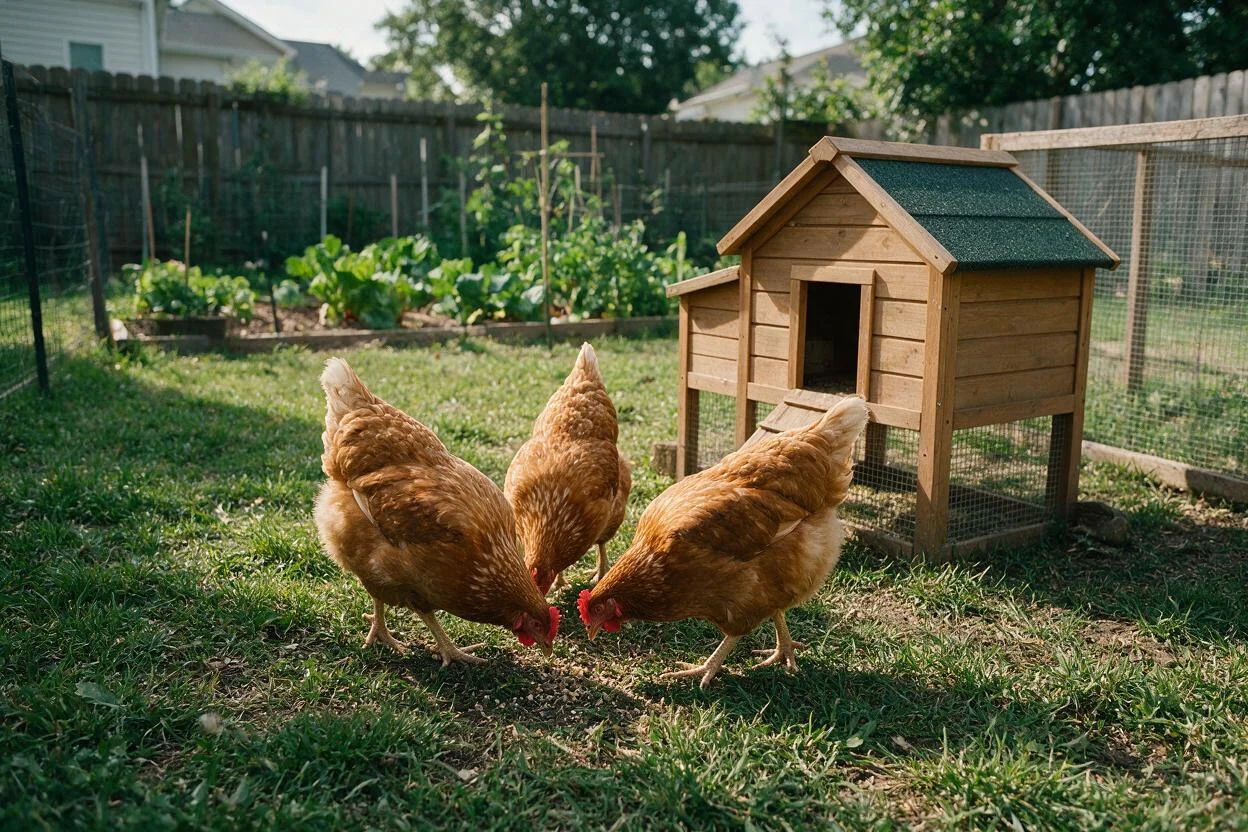
Breed matters too, and a weekly peak is not an annual average: a commercial White Leghorn averages about 265 eggs a year — roughly five a week averaged across the year — and most backyard breeds lay fewer. At the peak rate of about six eggs per hen per week, three young hens could lay around a dozen and a half eggs in a good week, and noticeably fewer in winter.
What hens need
| Need | Guideline | Source |
|---|---|---|
| Indoor space | At least 3–5 sq ft per bird | UMN Extension |
| Nest boxes | One per 4–5 hens | UMN Extension |
| Feed | About 3 lb per week for a 6-lb hen; a balanced layer ration, plus crushed oyster shell and grit | UMN Extension |
| Water | Clean water available at all times | UMN Extension |
| Light | At least 12–14 hours a day to keep laying (OSU suggests 14–16 with added light) | UMN / OSU Extension |
| Protection | A secure coop and run that keeps out predators at night | General practice |
Scratch grains and kitchen scraps are fine as treats, but Oregon State notes that too many can unbalance a hen's diet and reduce laying.
The real costs and time
Before you buy birds, price out the whole setup locally: a coop and run, fencing, a feeder and waterer, bedding, and a year of feed. Coops range from simple DIY builds to expensive kits, so this is where budgets are won or lost.
Then count the time. Chickens need feeding, fresh water and egg collection every day, plus regular coop cleaning. Someone has to cover them when you travel.
Keeping your flock healthy
- Clean the coop before adding new birds, and wash feeders and waterers regularly.
- Watch egg numbers. Oregon State notes that a sudden drop in laying is often the first sign of illness in a flock.
- Wash your hands after handling birds, eggs or equipment. The CDC notes that backyard poultry can carry Salmonella even when the birds look clean and healthy (CDC).
- Follow your state's and USDA guidance on avian influenza and keep wild birds away from feed and water.
- Wear a dust mask when cleaning. Minnesota Extension warns that dried manure dust can be harmful to breathe.
- Wash your hands after handling birds, eggs or equipment.
Chickens work best as part of a bigger plan
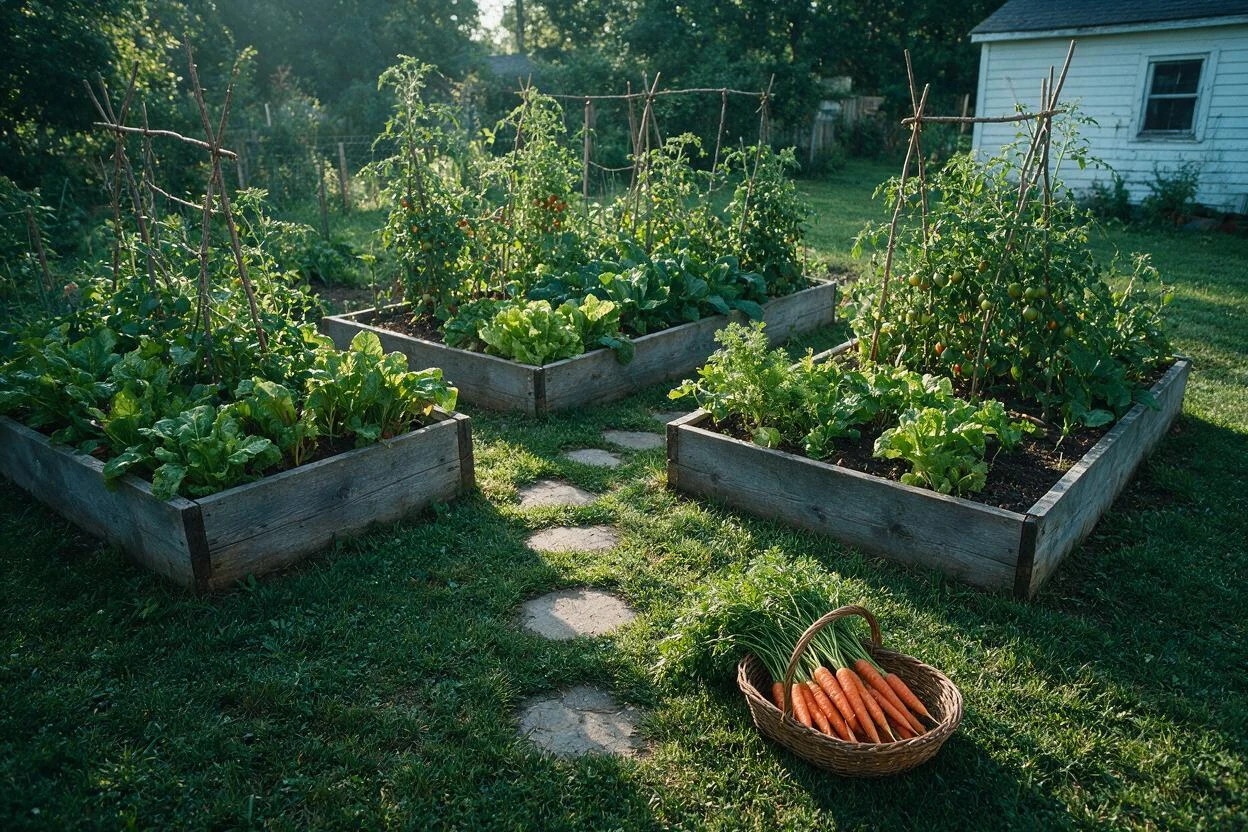
Backyard chickens pay off most when they're connected to the rest of your yard. Their manure, once composted, feeds the garden. They can turn over a spent garden bed. Garden scraps become part of their diet. The eggs, the compost and the vegetables start to support each other.
That whole-backyard approach is the focus of The Self-Sufficient Backyard by Ron and Johanna, who say they have homesteaded off the grid for about 40 years. According to the publisher, it covers small animals alongside garden layout, crop rotation, seed saving, food storage and rainwater collection, with a sample quarter-acre plan used for a family of four.
You may see promotional claims about how many eggs a hen can lay with the "right" methods. Use the university figures above as your planning guide; real-world numbers depend on breed, age, daylight and care.
Decide whether a flock fits your life
Backyard chickens aren't a shortcut to cheap eggs, especially with prices expected to fall in 2026. They're a daily commitment with real costs. But for families who want fresh eggs, better compost and a more productive yard, a small flock can be one of the most rewarding projects you take on.
Check your local rules, plan for realistic egg numbers, and build the coop before the chicks arrive. If you want chickens to be one part of a bigger self-reliant backyard, a complete plan helps you fit the pieces together.
Egg production varies with breed, age, season, daylight, nutrition and health. Figures above are general guidance from university extension services.
Sources & further reading
- USDA Economic Research Service, Food Price Outlook: Summary Findings (updated Oct 23, 2026)
- University of Minnesota Extension, "Raising chickens for eggs"
- Oregon State University Extension, "Why did my chickens stop laying?" (PNW 565)
- Product details: Self-Sufficient Backyard FAQ (publisher claims; ordering is handled by Digistore24)
Published by Simple Strong Living. Questions or a correction? Get in touch.