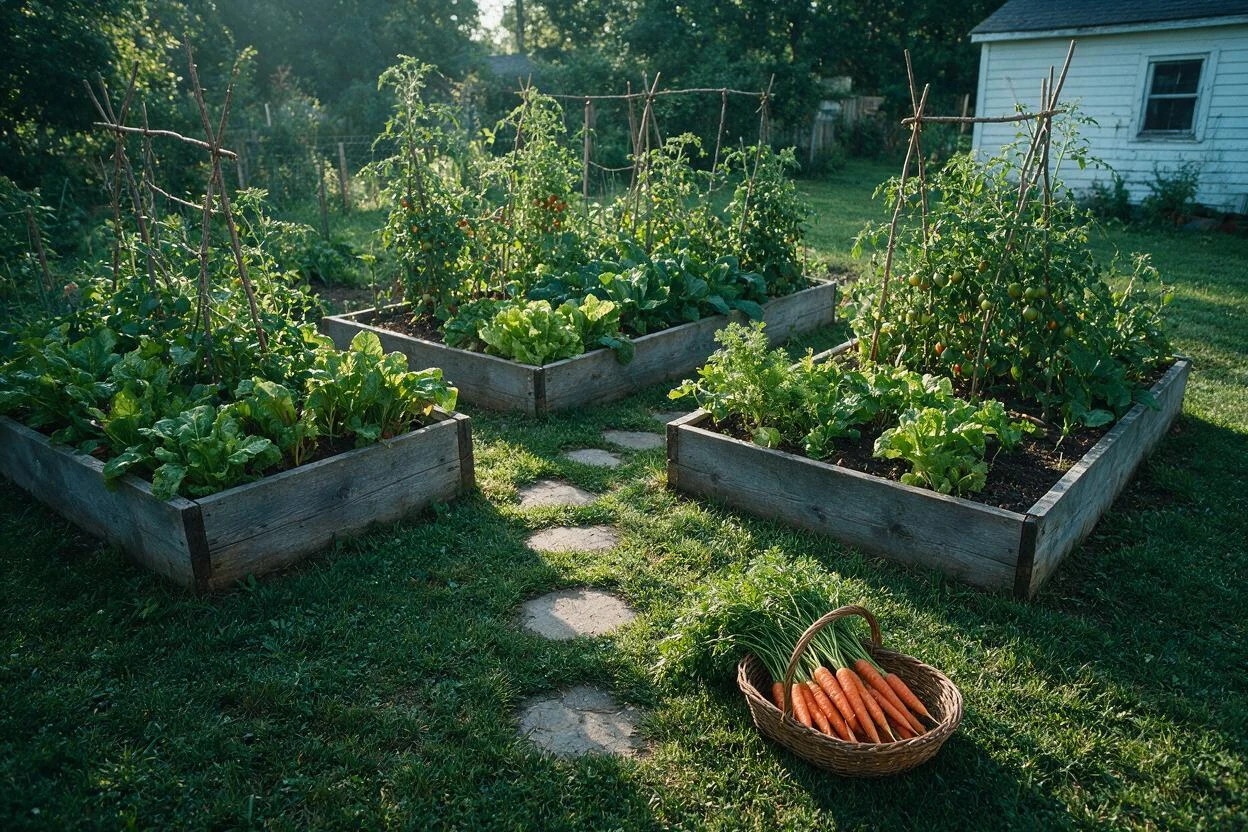
Every gardener knows the feeling. In August you have more squash and tomatoes than you can give away. By January you're paying top price for vegetables trucked across the country, and USDA expects fresh-vegetable prices to rise another 5.8% in 2026 (USDA ERS).
Before home refrigerators were common, families solved this problem with cool cellars, cold pantries and careful habits. Many of the same methods still work today, and some cost almost nothing.
Why stored vegetables go bad
A harvested carrot or potato is still alive. It keeps breathing, using up its stored sugars and giving off moisture and heat. Storage is about slowing that process down without freezing the vegetable or letting it dry out.
Three things do most of the work: temperature, humidity and air. The University of Minnesota Extension notes that harvested vegetables still need oxygen, so even a cool, dark storage space needs some ventilation (UMN Extension).
Match each vegetable to the right conditions
Not every crop wants the same thing. Root crops like it cold and damp. Onions and squash prefer cool and dry. Here are the guidelines from the University of Minnesota Extension:
| Vegetable | Storage conditions | Typical storage life | Tip |
|---|---|---|---|
| Carrots | Cold and moist: 32–40°F, 95% humidity | About 8 months | Cut off the tops first |
| Potatoes | Cold, moist and dark: 32–40°F, 95% humidity | About 6 months | Cure at 50–60°F for 2 weeks first; store at 40–50°F if you plan to fry them |
| Beets | Cold and moist: 32–40°F, 95% humidity | About 5 months | Cut off the tops first |
| Cabbage | Cold and moist: 32–40°F, 95% humidity | About 5 months | Harvest firm, compact heads |
| Onions | Cold and dry: 32–40°F, 65% humidity | About 4 months | Cure at room temperature for 2–4 weeks; don't let them freeze |
| Winter squash | Cool and dry | 2–6 months, by variety | Harvest when the shell is hard, before frost |
Source: University of Minnesota Extension, Harvesting and storing home garden vegetables.
Storage spaces you may already have
You don't need a hillside cellar to start. Look around your home for spaces that naturally match these conditions.
A cool basement corner (cool and dry)
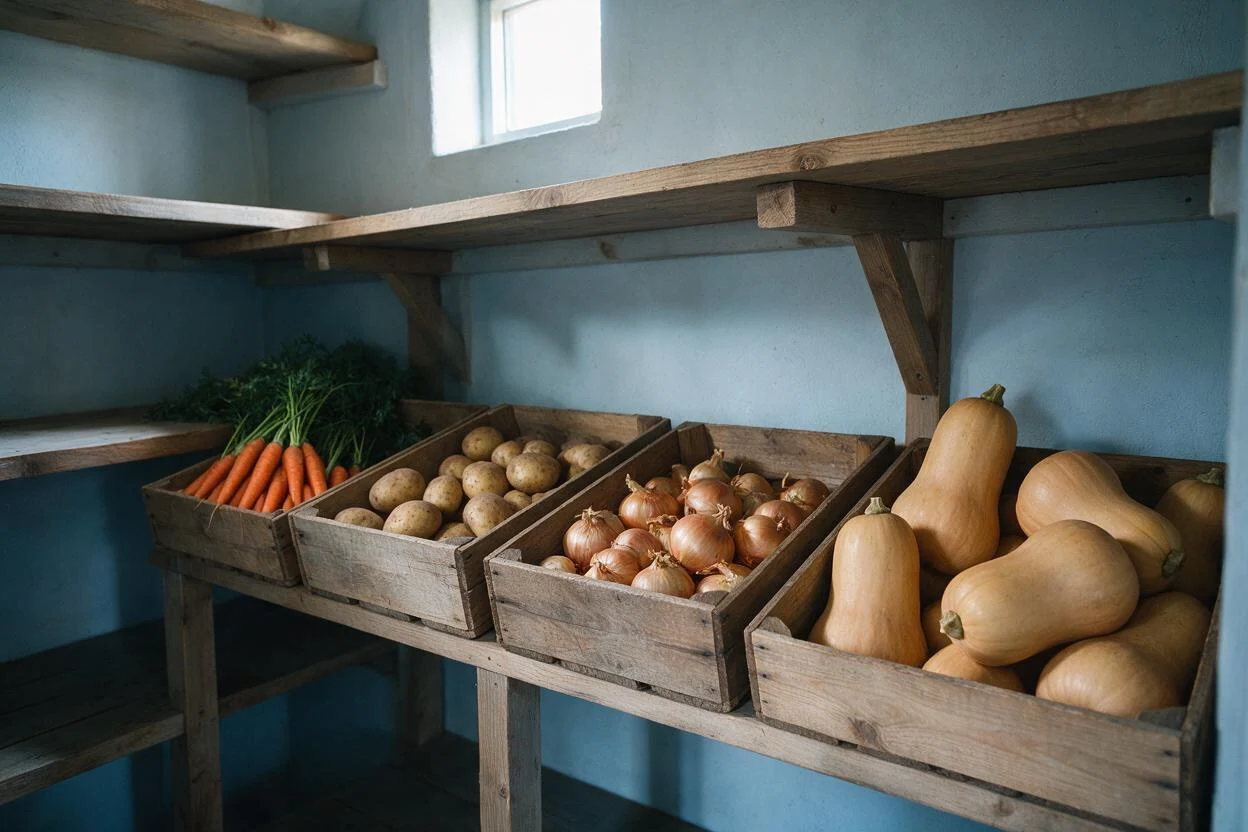
Most modern basements are cool and fairly dry, which suits onions and winter squash. Pick the coldest corner, away from the furnace, and keep produce off the floor on slatted shelves or in crates so air can move around it.
A cold, damp space (cold and moist)
Carrots, beets and potatoes need cold and humidity. An unheated cellar, a partly buried container, or a box of damp sand or sawdust in a cold room can work. Minnesota Extension suggests insulating with clean straw, hay or wood shavings that haven't been treated with pesticides, and protecting stored crops from rodents.
An attached garage or enclosed porch
These can work in mild winters, but they swing in temperature. Keep a cheap thermometer and humidity gauge out there, and be ready to move crops inside before a hard freeze.
Habits that make stored food last
- Store only your best produce. Bruised, cut or diseased vegetables spoil first and can spread rot to their neighbors.
- Cure the crops that need it. Potatoes and onions keep far longer after curing (see the table).
- Trim the tops from carrots and beets before storing.
- Keep some crops apart. Minnesota Extension advises not storing cucumbers with apples or tomatoes.
- Check every week or two. Remove anything soft, sprouting or moldy.
- Label and rotate. Eat the shortest-lived crops first.
If you also can or pickle, follow tested recipes from a reliable source, such as your state extension service or the National Center for Home Food Preservation.
Ready for a real root cellar?
If you grow enough to fill crates every fall, a purpose-built root cellar or cold room is the next step. It's a real project: you'll need to think about drainage, ventilation, insulation, and local building rules before you dig.
This is one of the areas covered in The Self-Sufficient Backyard by Ron and Johanna, homesteaders who say they have lived off the grid for about 40 years. According to the publisher, the book includes chapters on root cellars, smokehouses and seed saving with color photos and diagrams, alongside garden planning, rainwater catchment and small animals. One of the included bonus guides, DIY Projects from the 1900s, also covers root cellars, smokehouses and other older food-keeping methods.
It won't replace advice on your specific site. Soil, water table and climate all affect where and how you can build. But if you like the idea of keeping your own harvest through the winter, it's a practical place to start planning.
Make your harvest last
You don't need special equipment to stop wasting your harvest. Match each crop to cold-and-moist or cool-and-dry conditions, cure what needs curing, and check your stores regularly. A basement corner and a few crates can keep potatoes, onions and squash going well into winter.
If you want to take it further, with a proper cellar, a smokehouse and seeds saved for next year, a step-by-step guide can save you a lot of trial and error.
Storage times are typical ranges from university extension guidance; actual results depend on variety, harvest condition and your storage space.
Sources & further reading
Published by Simple Strong Living. Questions or a correction? Get in touch.